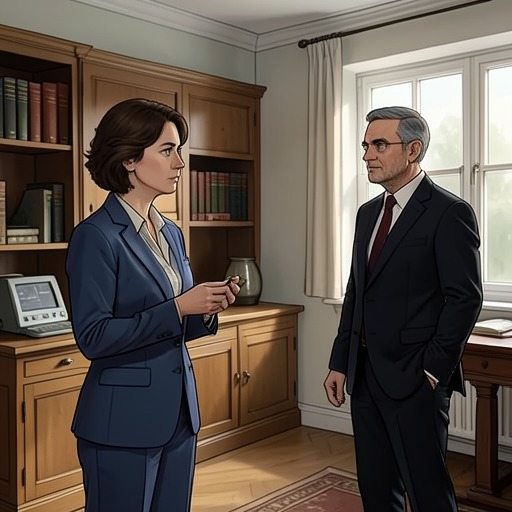
Rachel Watson and Tom’s marriage and post-divorce entanglement
The Girl on the TrainRachel Watson and Tom’s marriage and post-divorce entanglement are marked by a sharp contrast: the relationship that left Rachel grieving and angry still has the power to make her hope for reconciliation. Its history of infertility, financial resentment, alcohol-fuelled conflict, and betrayal remains active in their later encounters, where even a familiar nickname can reopen the bond.
Marriage, infertility, and money
Four years before one of Rachel’s later recollections, the couple’s first and only round of IVF had failed. Rachel wanted to try again, but Tom said they could not afford it. She accepted the explanation: they had a large mortgage, and Tom still had debts from a bad business deal his father had persuaded him to pursue. The practical limit did not lessen the loss for Rachel. She describes biting back tears when she saw a pregnant stranger or heard another person’s happy news, making the failed treatment an ongoing source of grief rather than a closed episode.
A couple of months later, Tom arranged a four-night trip to Las Vegas with friends Rachel had never met, to watch a major boxing match and let off steam. Rachel saw the flight and hotel booking receipt in his email and knew the trip had cost a great deal. To her, the expense sharpened the earlier refusal: the money unavailable for another IVF round had been found for the trip. Her anger accumulated through an afternoon of drinking before she confronted him, and she remembers little of the argument itself. What remains is Tom’s cold silence the next day and his account of her actions: she had smashed their framed wedding photograph, screamed that he was selfish, and called him a useless husband and a failure. Rachel remembers hating herself afterward, so the dispute binds resentment about money and parenthood to shame about her own conduct.
Betrayal and the marriage’s ending
Tom’s relationship with Anna Watson began while he and Rachel were still together. In Anna’s account, she and Tom used a café around the corner as a meeting place while Rachel worked in London. Their meetings carried the thrill of being discovered, and Anna admits that she once wanted Rachel to walk in and see that Tom was no longer hers. The memory later feels difficult for Anna to reconcile with the family life she shares with Tom and Evie.
The affair’s history meets its aftermath on the walk to that café. Tom pushes Evie’s buggy while Anna savours the image of the three of them as a beautiful family. Near number fifteen, Rachel appears at the door. Anna freezes, then lunges to lift Evie from the buggy, startling the child into tears. The scene turns an old secret into a present-tense encounter: Rachel’s presence unsettles the family picture that Anna has built, while the child becomes part of the tense contact between the two women. For Rachel, the end of the marriage is still painful enough that, when a former friend once offered sympathy, she recalls losing her temper and rejecting the comfort as empty.
Familiarity after separation
Even after the marriage has ended, Tom’s manner can revive Rachel’s attachment. When he calls her by the shortened name she remembers from their intimacy, she feels light-headed and wants to smile. The small gesture prompts a chain of possibilities: perhaps things are not going well with Anna; perhaps Tom remembers what was good between them; perhaps he misses Rachel. These are hopes, not evidence of a reunion, but their force shows how little emotional distance has settled between them.
Tom’s concern about Scott further complicates the moment. He worries that Rachel cannot be certain Scott is safe, and his hand moves as though he might take hers before he stops himself. Rachel reads the familiar form of address and the almost-touch through the history they share, allowing them to suggest a renewed closeness even as Tom’s warning also raises doubt and concern. The scene leaves the relationship suspended between past intimacy and present separation.
The relationship’s lasting pattern
The surviving episodes place intimacy and injury side by side. Rachel’s desire to try IVF again meets Tom’s refusal on financial grounds; the later Las Vegas booking makes that refusal feel unequal. Her drunken outburst brings its own remorse, while Tom’s withdrawal leaves her with his version of what happened. His affair with Anna marks a further breach, yet after the marriage ends Rachel remains vulnerable to signs that he might still choose her.
That tension is conveyed through ordinary details rather than a declaration of reconciliation: a wedding photograph broken during an argument, a name spoken in an old familiar way, and a hand that begins to reach before stopping. The relationship’s post-divorce life is therefore not a clean break. It is an unresolved attachment in which shared history can revive hope even when betrayal and separation remain unmistakable.